What Does Full Coverage Car Insurance Actually Include?
“Full coverage car insurance” is one of the most commonly used terms in the U.S. insurance industry, but also one of the most misunderstood. Many drivers assume it means complete protection in every situation, but in reality, full coverage is not a single policy or a guarantee of total protection.
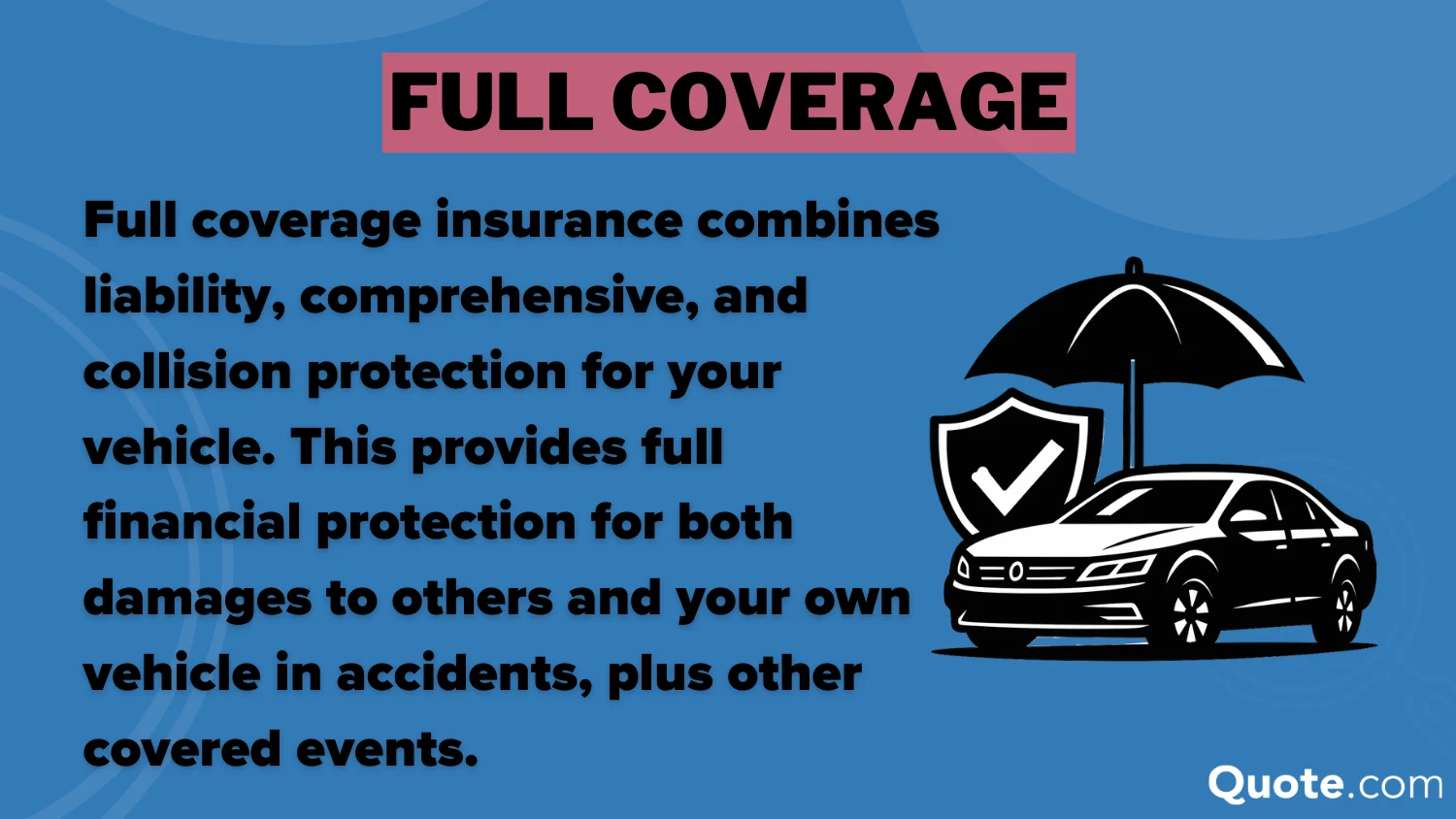
Instead, full coverage is a combination of different types of insurance that together provide broader financial protection for both your vehicle and others involved in an accident.
Understanding what full coverage actually includes is essential for choosing the right policy and avoiding unexpected costs after a claim.
What “full coverage” really means
Full coverage car insurance is not an official insurance product. It is a general term used to describe a policy that includes multiple types of coverage beyond the minimum liability insurance required by law.
In most cases, a full coverage policy includes:
- Liability insurance
- Collision coverage
- Comprehensive coverage
These three components work together to protect you financially in a wide range of situations, from accidents to theft and natural disasters.
However, even with full coverage, there are still limitations, exclusions, and optional add-ons that are not automatically included.
Liability insurance as the foundation
Every full coverage policy starts with liability insurance. This is the legal minimum required in almost every U.S. state.
Liability insurance covers:
- Injuries you cause to other people (bodily injury liability)
- Damage you cause to another person’s property (property damage liability)
It does NOT cover:
- Your own vehicle repairs
- Your own medical bills
Because of this, liability insurance alone is not considered full coverage, but it is always part of it.
Collision coverage explained
Collision coverage is one of the key components that turns a basic policy into full coverage.
This type of insurance pays for damage to your own vehicle after a collision, regardless of who is at fault.
It typically covers situations such as:
- Crashing into another vehicle
- Hitting a stationary object (like a pole or guardrail)
- Single-car accidents, such as rolling or losing control
Collision coverage is especially important for newer or higher-value vehicles where repair costs can be significant.
However, it usually comes with a deductible, which is the amount you must pay out of pocket before the insurance company covers the rest.
Comprehensive coverage explained
Comprehensive coverage protects your vehicle from damage that is not caused by a collision.
This includes a wide range of non-accident-related events such as:
- Theft of the vehicle
- Vandalism or intentional damage
- Fire damage
- Natural disasters (hail, floods, storms)
- Falling objects (trees, debris)
- Animal collisions (such as hitting a deer)
Comprehensive insurance is particularly valuable in areas with high crime rates or extreme weather conditions.
Like collision coverage, it also includes a deductible.
What full coverage does NOT include
One of the most important misconceptions is believing that full coverage means “everything is covered.”
In reality, full coverage still has exclusions and limitations. It does NOT automatically include:
- Roadside assistance
- Rental car reimbursement
- Gap insurance
- Mechanical breakdowns
- Custom parts or modifications (unless specifically added)
- Personal belongings inside the car
These services are considered optional add-ons and must be purchased separately.
Optional add-ons often confused with full coverage
Many insurance companies offer additional protections that are sometimes mistakenly assumed to be part of full coverage.
Rental car reimbursement
Covers the cost of a rental vehicle while your car is being repaired after a covered claim.
Roadside assistance
Provides help in situations like flat tires, dead batteries, lockouts, or towing.
Gap insurance
Covers the difference between what you owe on a car loan and the actual value of the vehicle if it is totaled.
These extras can significantly improve your protection but are not included automatically in a standard full coverage policy.
Deductibles in full coverage policies
Both collision and comprehensive coverage typically include deductibles.
A deductible is the amount you pay before your insurance kicks in.
For example:
- Repair cost: $3,000
- Deductible: $500
- Insurance pays: $2,500
Drivers can usually choose their deductible amount when setting up their policy. A higher deductible generally lowers the monthly premium, while a lower deductible increases it.
When full coverage is required
Full coverage is not legally required in the United States, but there are situations where it is mandatory in practice.
Auto loans and leasing
If your car is financed or leased, lenders typically require full coverage to protect their investment.
New or expensive vehicles
Even when not required, full coverage is often recommended for new cars due to high replacement costs.
When full coverage may not be worth it
Full coverage is not always the most cost-effective option.
It may not be necessary when:
- The vehicle is old and has low market value
- The cost of premiums exceeds potential repair value
- The driver can afford to replace the vehicle out of pocket
In these cases, liability-only coverage may be more financially efficient.
How insurance companies define full coverage
Insurance companies do not have a universal definition of “full coverage.” Instead, it is a combination of selected coverages bundled together.
This means two policies labeled as full coverage may still differ depending on:
- Coverage limits
- Deductibles
- Optional add-ons included
- State-specific requirements
Because of this variation, it is important to review the policy details rather than relying on the term alone.
Common misconceptions about full coverage
Many drivers misunderstand what full coverage actually provides. Some of the most common misconceptions include:
- Thinking it covers all possible damages in every situation
- Assuming personal belongings inside the car are included
- Believing there are no out-of-pocket costs after an accident
- Assuming rental cars and roadside assistance are always included
In reality, full coverage provides strong protection, but it is not unlimited.
Why full coverage costs more
Full coverage insurance is more expensive because it includes protection for your own vehicle, not just third parties.
Insurance companies take on more financial risk, especially in cases of theft, weather damage, or total loss of a vehicle.
The main factors that influence cost include:
- Vehicle value and repair costs
- Driver age and experience
- Location and risk level
- Deductible amount chosen
- Driving history
Final thoughts
Full coverage car insurance is one of the most important but misunderstood concepts in the U.S. insurance system. It is not a single policy, but a combination of liability, collision, and comprehensive coverage designed to provide broader financial protection.
While it offers significantly more protection than liability-only insurance, it still has limitations and does not cover every possible situation.
The key to choosing the right policy is understanding exactly what is included, what is excluded, and how it applies to your personal driving situation.
For many drivers, full coverage is essential. For others with older vehicles, it may not be necessary. The right choice depends on balancing cost, risk, and vehicle value.
Frequently Asked Questions
Is full coverage car insurance really full coverage?
No. It covers many situations, but not everything.
Does full coverage include theft?
Yes, if comprehensive coverage is included.
Is full coverage required in the USA?
Not by law, but often required for financed or leased cars.
Does full coverage cover my own car in an accident?
Yes, through collision coverage, even if you are at fault.